Mythical Mexico: 5 Incredible Legends Shaping Mexican Folklore
·Revised
Introduction
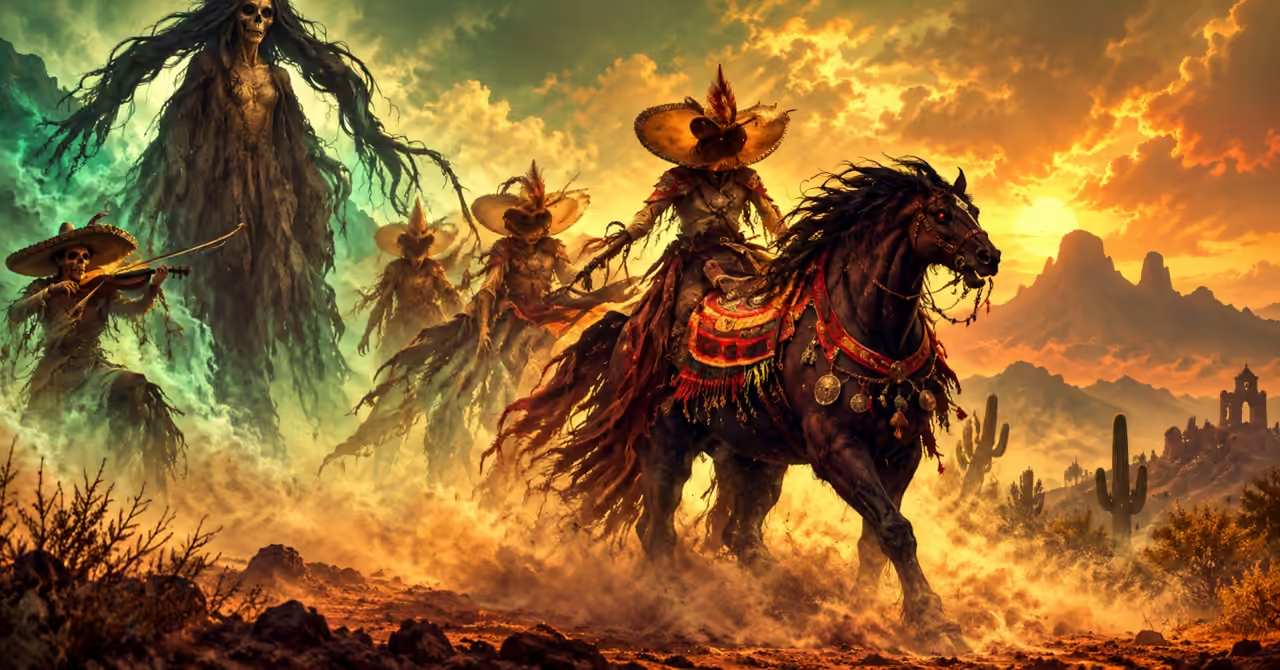
Imagine a woman's ghostly cries beside a moonlit river, a mysterious beast stalking the countryside, or two lovers transformed into towering volcanoes. Welcome to mythical Mexico, where ancient gods, restless spirits and extraordinary creatures bring centuries of folklore to life.
Like the fascinating legends of Australia, Mexico's folklore blends ancient beliefs, natural wonders and human fears into unforgettable stories. Some have survived for centuries; others emerged surprisingly recently.
Discover five remarkable legends, from the feathered serpent Quetzalcoatl to the terrifying El Chupacabra, and enter a world where myth and reality are never quite as separate as they seem.
1. Quetzalcoatl: The Feathered Serpent of Mexican Mythology
Imagine a serpent covered in brilliant green feathers, rising from the earth towards the heavens. This extraordinary creature was Quetzalcoatl, one of the most powerful and mysterious gods of ancient Mesoamerica. His name combines the magnificent quetzal bird with the serpent, uniting the worlds of sky and earth in a single divine being.
Long before the Aztecs rose to power, the feathered serpent appeared in temples, carvings and religious traditions across Mesoamerica. Worshipped in different forms by several civilisations, Quetzalcoatl was associated with creation, wisdom, agriculture and knowledge. Some traditions credited him with helping humanity acquire the skills needed to build civilisation.
Yet one of his most intriguing legends concerns a figure who may have been a ruler, a religious leader or a character shaped by generations of storytelling. Known as Topiltzin Quetzalcoatl, he belonged to the traditions of the ancient Toltecs. His story became so closely entwined with that of the feathered serpent god that separating history from mythology remains remarkably difficult.
According to one famous version, Topiltzin Quetzalcoatl ruled wisely and encouraged learning and religious devotion. But his prosperity attracted a dangerous enemy: Tezcatlipoca, a powerful god associated with night, conflict and sorcery.
Rather than defeat him in battle, Tezcatlipoca used deception. Through trickery and humiliation, he brought about Quetzalcoatl's downfall. Ashamed, the legendary ruler abandoned his homeland and journeyed east. Some versions describe his departure towards the sea; others tell of his transformation into a heavenly being.
The mystery deepens with later traditions describing Quetzalcoatl's possible return. Historians continue to debate how these stories developed and how much they reveal about the Toltecs themselves. Was Topiltzin a historical ruler whose life became legend, or a mythical figure given the qualities of a king? The surviving traditions offer no simple answer.
Today, Quetzalcoatl remains an unforgettable symbol of Mexican mythology. His stories bring together creation, wisdom, rivalry, exile and renewal, revealing a world in which gods could shape civilisation and even the greatest rulers could fall through deception.
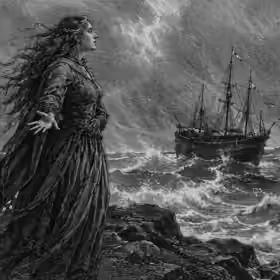
2. La Llorona: The Haunting Legend of the Weeping Woman
Imagine walking beside a river late at night. The water moves quietly beneath the moonlight, and the streets are empty. Suddenly, a distant cry breaks the silence. It sounds like a woman calling for her children. As you listen, the voice seems to come closer.
According to one of Mexico's most haunting legends, you may have encountered La Llorona, the Weeping Woman.
La Llorona is said to wander along rivers, lakes and lonely roads, forever searching for the children she has lost. She is often described as a ghostly woman dressed in white, with long dark hair and a sorrowful voice. Her cries echo through the night, frightening those who hear them.
The story has many versions, but one of the best-known tells of a young woman who falls deeply in love with a man. They have children together, but their happiness does not last. When the man abandons her, the woman becomes overwhelmed by jealousy, anger and despair.
In a terrible moment, she throws her children into a river. Almost immediately, she realises what she has done. Filled with horror and grief, she searches desperately for them, but it is too late. Her sorrow follows her beyond death, and she is condemned to wander the earth, crying for the children she can never find.
Not every version tells the story in this way. In some, La Llorona is a grieving mother who has suffered a terrible loss. In others, she is a dangerous spirit who frightens travellers or warns children against wandering near water after dark. Her appearance also changes from one region to another.
These differences are part of the legend's long history. The tale has been shaped by Indigenous traditions, later European influences and generations of storytelling. Families and communities have added their own details, giving La Llorona a different character depending on where her story is told.
Beyond the supernatural mystery, La Llorona's story explores powerful human emotions. Love, jealousy, grief, guilt and regret all have a place in the tale. It has also served as a warning to children about the dangers of rivers and other waterways.
La Llorona remains a familiar figure in Mexican culture, appearing in books, films, music and countless stories told around the world. Her legend survives because it offers more than a ghostly encounter. Beneath the frightening cries is a story of sorrow and the terrible consequences of actions that cannot be undone.
3. Popocatepetl and Iztaccihuatl: A Tale of Eternal Love
Not far from Mexico City stand two magnificent volcanoes, Popocatepetl and Iztaccihuatl. Their great peaks rise above the surrounding landscape, often covered in snow or hidden among the clouds. For generations, people have looked towards these mountains and remembered a tragic story of love, betrayal and devotion.
According to a popular version of the legend, Popocatepetl was a brave warrior who fell in love with Iztaccihuatl, the beautiful daughter of a powerful ruler of the Tlaxcalan people. The two were deeply devoted to each other and dreamed of spending their lives together.
Their happiness, however, depended on the outcome of a war. When Popocatepetl asked for permission to marry the princess, her father agreed on one condition: the young warrior must first return victorious from battle.
Popocatepetl accepted the challenge and marched away with the army. Iztaccihuatl remained behind, waiting for news of the man she loved. Days passed, and then weeks, but still there was no word of his return.
During his absence, a jealous rival spread a terrible lie. He told Iztaccihuatl that Popocatepetl had been killed in battle. Heartbroken by the news, the princess fell into a deep sorrow from which she never recovered. According to the legend, she died before her beloved could return.
Yet Popocatepetl was alive. He had fought bravely and returned victorious, expecting to be reunited with Iztaccihuatl. Instead, he discovered that the woman he loved was dead.
Overcome by grief, the warrior carried her body into the mountains. He laid her gently upon a great peak and remained beside her, determined never to leave. In some versions of the story, the gods transformed the lovers into mountains so that they could remain together forever.
Iztaccihuatl became the sleeping princess, her body resting beneath a blanket of white snow. Popocatepetl became the warrior who watches over her. His mountain still releases smoke and ash, which the legend imagines as signs of his undying love and the fire that burns within his heart.
The two volcanoes are real landmarks in central Mexico. Popocatepetl is an active volcano, while Iztaccihuatl has been quiet for many thousands of years. Their towering shapes and changing appearance have made them natural subjects for generations of storytellers.
Their names and tragic romance have appeared in poems, songs, paintings and family stories. Although different versions of the legend exist, its message remains much the same: true love can endure even in the face of death.
When clouds gather around the mountain peaks, or smoke rises from Popocatepetl, it is easy to understand why this beautiful landscape inspired such an unforgettable tale. The warrior and his princess remain together, watching over the valleys of Mexico.
4. El Chupacabra: Unravelling the Mystery of the Cryptid
Deep in the world of strange creatures and unexplained sightings lives one of Latin America's most famous modern legends: El Chupacabra. Its name means "goat-sucker", a reference to the mysterious attacks on livestock that first brought the creature to public attention.
Unlike the ancient stories of Quetzalcoatl, El Chupacabra is a surprisingly recent legend. Reports of the creature became famous in Puerto Rico during the 1990s, when farmers discovered dead animals and believed something unusual had attacked them.
Some animals appeared to have strange wounds, and stories spread that their blood had been drained. The attacks frightened local communities and soon attracted the attention of newspapers and television reporters. People began asking whether an unknown predator might be hiding in the countryside.
Early descriptions of El Chupacabra painted a frightening picture. Witnesses spoke of a strange creature with glowing red eyes, sharp teeth, a reptile-like body and spikes running along its back. Some claimed it could leap enormous distances or move with remarkable speed.
As the stories travelled from Puerto Rico to Mexico and the United States, the creature began to change. Later reports described something more like a wild dog or coyote, often with little hair and an unusual appearance. Some of these animals were later identified as known species suffering from diseases such as mange.
Despite the many sightings, there is no reliable scientific evidence that El Chupacabra exists as an unknown animal. Many reported encounters can be explained by familiar creatures, mistaken observations or stories that have grown more dramatic with each retelling.
Yet the lack of evidence has done little to weaken the legend. El Chupacabra has appeared in films, television programmes, books and popular discussions of mysterious animals. Its frightening appearance and unusual origin make it especially attractive to people fascinated by creatures that might be hiding beyond the reach of science.
The legend also tells us something about human imagination. When animals are found dead under strange circumstances, people naturally look for explanations. If the cause is uncertain, fear and curiosity can turn an ordinary mystery into an extraordinary story.
El Chupacabra continues to change as new generations of artists and storytellers imagine what the creature might look like. Sometimes it is a monster, sometimes a misunderstood animal, and sometimes a mysterious symbol of the unknown.
Whether imagined as a spiny beast or a shadowy animal moving through the desert, El Chupacabra has secured its place among the most recognisable legends of modern Mexican folklore. Its story proves that new myths can still emerge in a world filled with cameras, scientific discoveries and instant communication.
5. Nahual: Exploring the Mysteries of Shape-shifting Sorcery
Imagine meeting a stranger on a lonely road at night. There is something unusual about the way the person moves, but before you can understand what it is, the stranger disappears into the darkness. Moments later, an animal emerges from the same place and watches you with strangely familiar eyes.
According to some traditional Mexican beliefs, you may have encountered a Nahual, a mysterious figure said to possess the power to transform into an animal.
Stories of the Nahual have deep roots in the Indigenous cultures of Mexico and other parts of Mesoamerica. The word is also written as Nagual, and its meaning changes among different communities. In some traditions, a Nahual is a person who can take animal form. In others, it describes a special spiritual connection between a person and an animal.
Jaguars, birds, coyotes and other creatures appear in these traditions. The animal may represent strength, wisdom, speed or a connection with the natural world. Some stories describe a person taking on these qualities through a powerful spiritual bond.
In certain legends, Nahuals are believed to possess extraordinary abilities. They may travel secretly at night, see things hidden from ordinary people or move between the human and animal worlds. Some are described as healers and protectors, while others are feared for their ability to cause harm.
This mixture of good and evil makes the Nahual especially mysterious. A shape-shifter might protect a village from danger, but another might use supernatural powers for selfish or frightening purposes. The outcome depends on the particular story and the intentions of the person involved.
Beliefs about Nahuals are not identical across Mexico. Different Indigenous communities have their own traditions concerning animals, spirits, healing and transformation. These beliefs should not be understood as one single system, but as part of a rich and varied cultural heritage.
The idea of a person sharing a special bond with an animal also reflects the importance of nature in many traditional beliefs. Animals are not simply creatures living alongside humans. They may hold spiritual meaning, represent personal qualities or serve as links between the visible world and the unseen.
Over time, the Nahual has become a popular figure in stories, artwork and modern entertainment. The shape-shifting character offers endless possibilities for tales of mystery, hidden identities and encounters with the supernatural.
Today, beliefs connected with the Nahual remain meaningful in some communities, while the legends continue to reach new audiences through books, films and oral storytelling.
The Nahual reminds us that the natural world has long inspired stories about powers beyond human understanding. Perhaps the greatest mystery is not whether a person can become an animal, but why the idea of such a transformation has fascinated people for so many generations.
Conclusion
From the feathered serpent Quetzalcoatl to the mournful cries of La Llorona, Mexico's legends reveal a world of extraordinary gods, tragic lovers and mysterious creatures. Whether it is the shape-shifting Nahual or the terrifying El Chupacabra, each story offers a glimpse into the fears, hopes and imagination of generations past.
These legends endure because they speak to something deeply human: our fascination with the unknown. Passed down through families, celebrations and popular culture, they continue to evolve, keeping their mysteries alive for new generations.
But Mexico is far from alone in its supernatural traditions. Victorian Britain had its own strange fears, curious superstitions and extraordinary beliefs. Discover five forgotten Victorian beliefs and superstitions that once shaped everyday life. Some may seem familiar, while others are wonderfully peculiar!
Take a Little Mythical Mexico Home
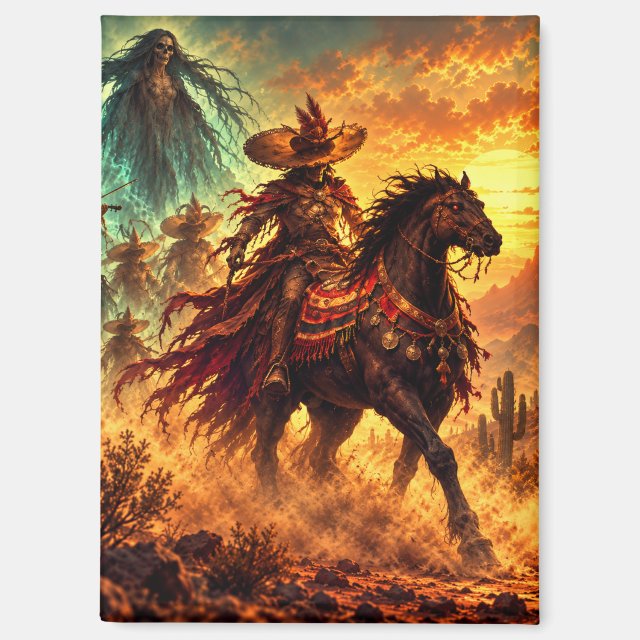
A ghostly horseman races through a blazing Mexican sunset, surrounded by mysterious spirits and ancient folklore. Bring a little of this supernatural world into your home with our exclusive Mythical Mexico fridge magnet, featuring original artwork created for Phillaneum.
Discover the Mythical Mexico Magnet at the Phillaneum Museum Shop
Author's Notes
Notes & Memoranda
As is often the case, the subject extends beyond the bounds of a single article. The notes and memoranda below gather together useful definitions, related observations, references, and occasional curiosities discovered along the way.
Observations
First published on 7 June 2023, Mythical Mexico has become one of Phillaneum's most popular articles. Its enduring appeal demonstrates how folklore crosses cultural and geographical boundaries, drawing readers into stories of mystery, love, fear and the supernatural. From ancient Mesoamerican gods to the modern legend of El Chupacabra, these five tales continue to inspire curiosity and remind us that great storytelling never grows old.
Glossary
From ancient feathered serpent gods to mysterious shape-shifters, Mexican folklore draws upon a rich world of mythology, history and supernatural beliefs. These definitions provide additional context for five important names and concepts explored in this article.
- Quetzalcoatl
- One of the most important gods of ancient Mesoamerica, represented as a feathered serpent combining the brilliant green quetzal bird with a snake. Associated with creation, wisdom, learning and agriculture, Quetzalcoatl was honoured by several civilisations before the rise of the Aztecs. His mythology also became closely connected with stories of the legendary Toltec ruler Topiltzin Quetzalcoatl.
- Tezcatlipoca
- A powerful Mesoamerican god whose name means "Smoking Mirror", associated with night, fate, rulership, conflict and sorcery. In some traditions, Tezcatlipoca appears as a rival to Quetzalcoatl, using deception rather than strength to bring about his downfall. His unpredictable character reflects the complex relationships between gods in ancient Mexican mythology.
- Toltec
- An ancient Mesoamerican civilisation centred on Tula in present-day Mexico, flourishing centuries before the Spanish conquest. Later peoples remembered the Toltecs as accomplished builders, artisans and rulers. Their legendary king, Topiltzin Quetzalcoatl, became associated with the feathered serpent deity, making the boundaries between historical events, religious traditions and mythology difficult to establish.
- Nahual (Nagual)
- A figure in Indigenous Mesoamerican traditions associated with animal transformation or a special spiritual connection between humans and animals. Depending on the community, a Nahual might be understood as a shape-shifter, healer, protector or dangerous sorcerer. Jaguars, coyotes and birds feature in different accounts, although beliefs and meanings vary considerably between regions and cultural traditions.
- Cryptid
- A creature reported through sightings, eyewitness accounts or folklore but not scientifically established as an unknown species. El Chupacabra is a famous example, emerging from reports in Puerto Rico during the 1990s before spreading throughout Latin America. Later sightings of hairless dogs and coyotes illustrate how misidentification, animal diseases and popular storytelling can sustain modern monster legends.
Frequently asked questions
Curious about something you’ve just read? These frequently asked questions explore some of the key ideas, details and questions surrounding the topic.
What is Quetzalcoatl and what did he represent?
Quetzalcoatl is the feathered serpent combining the quetzal bird and a serpent, honoured across several Mesoamerican civilizations and associated with wisdom, creation, learning, the calendar and agriculture. Stories about a Toltec ruler named Topiltzin Quetzalcoatl became closely linked with the deity, making it hard to separate history from myth.
Who is La Llorona and why is she said to haunt rivers and roads?
La Llorona is a ghostly woman often described in white who wanders rivers, lakes and lonely roads crying for lost children; one well-known version says she drowned her children and is condemned to search for them forever. Her story varies by region and has also been used to warn children about the dangers of waterways.
Are Popocatepetl and Iztaccihuatl real volcanoes, and how do they relate to the love legend?
Yes, they are real volcanoes near Mexico City—Popocatepetl is active while Iztaccihuatl has been quiet for many thousands of years—and a popular legend says they are a warrior and his princess transformed into mountains so they could remain together. Smoke from Popocatepetl is traditionally imagined as the warrior's undying love.
Where did the El Chupacabra legend begin and is there scientific proof it is an unknown creature?
Reports of El Chupacabra became famous in Puerto Rico during the 1990s after farmers found livestock with unusual wounds and apparent blood loss, and the creature's descriptions have since varied widely. There is no reliable scientific evidence that it exists as an unknown species, and many sightings have been linked to known animals or other explanations.
Further Reading…

References and Further Reading
- World History Encyclopedia, Quetzalcoatl. An introduction to the feathered serpent deity, his importance in Mesoamerican mythology and the traditions associated with him.
- Smithsonian Libraries and Archives, The Myth of Quetzalcoatl, by Enrique Florescano. A scholarly examination of the deity, the legendary Toltec ruler Topiltzin Quetzalcoatl and the development of their intertwined traditions.
- Library of Congress, American Folklife Center, La Llorona: An Introduction to the Weeping Woman. Explores the origins, regional variations and enduring cultural significance of Mexico's famous ghostly mother.
- Library of Congress, Aztec Mythology and the Love of Reading Rooms. Includes a traditional retelling of the tragic love story associated with Popocatépetl and Iztaccíhuatl.
- Instituto Nacional de Antropología e Historia (INAH), De Cholula cubierta de ceniza a la muerte de Tenoch: las erupciones pasadas del Popocatépetl (2023). Examines the historical eruptions of Popocatépetl and the cultural traditions surrounding this important Mexican volcano.
- Skeptical Inquirer, Benjamin Radford, Chupacabra Revisited: Dueling Origin Stories of the Hispanic Vampire (2025). Re-examines the creature's reported origins in 1990s Puerto Rico, competing eyewitness accounts and the evolution of this modern supernatural legend.
- Mexico Unexplained, The Nagual. An accessible introduction to Indigenous Mesoamerican traditions involving animal transformation, spiritual connections and supernatural abilities.
Disclosure
This article explores five legends from Mexican folklore as expressions of cultural tradition and storytelling, not as verified historical events or evidence of supernatural phenomena. These stories have evolved across generations, reflecting diverse Indigenous beliefs, regional interpretations and later cultural influences. No single retelling should be considered definitive or representative of every community. The accompanying illustrations are imaginative artistic interpretations rather than historically authentic depictions. This article also promotes an original Phillaneum fridge magnet available through our Zazzle store. Purchases support Phillaneum's independent publishing activities, and we may earn a commission through qualifying referral links at no additional cost to the reader.